If your boiler pressure keeps dropping, it can be worrying and frustrating, especially when it affects your heating and hot water. The good news is that many causes follow similar patterns, and there are safe checks you can do before calling a professional.
How boiler pressure should behave in normal use
Most modern sealed system boilers should sit around 1 to 1.5 bar when the system is cold. As the heating runs and the water expands, it is normal for the pressure to rise slightly, often to around 2 bar or a little more.
If the gauge keeps slipping below 1 bar, especially shortly after you top it up, there is probably a fault somewhere in the system. Understanding what is normal helps you spot when something is really wrong.
Quick checks you can do safely
Before you start, make sure you know how to turn your boiler off using the main power switch or fused spur. Never remove boiler covers yourself, as that is work for a Gas Safe engineer only.
You can safely carry out some simple observations that give useful clues:
Check the pressure cold and hot: Note the pressure when the system is off and cold, then again after the heating has been running for 20 to 30 minutes.
Look for leaks: Walk around radiators, visible pipework, and under the boiler for damp patches, green staining, rust marks, or water on the floor.
Inspect the outside discharge pipe: Find the copper pipe from the boiler that exits outside and check if it drips, runs, or shows signs of water staining.
Write down what you see, including the pressure readings. This will be very useful if you later need to call an engineer.
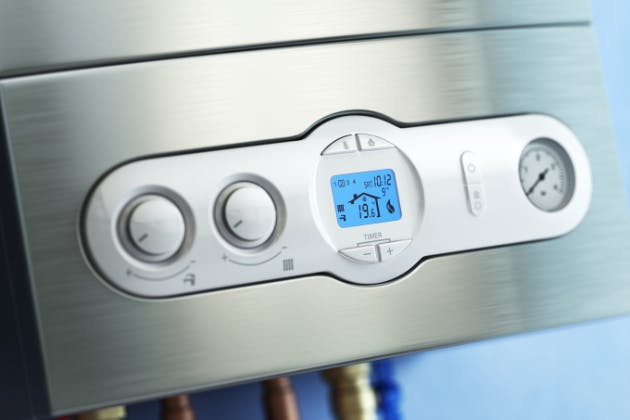
Main reasons boiler pressure keeps dropping
There is always a cause for falling pressure. Some issues are quite minor, while others need professional attention as soon as possible.
Small leaks on radiators and pipework
Even a slow drip can cause your pressure to drop over time. Common spots include radiator valves, towel rails, and joints where pipes have been recently altered or knocked.
Look for staining on carpets, slightly bulging skirting boards, or patches on ceilings below pipework. If you find a leak, put a tray or towel underneath, turn the radiator valve down if you can, and arrange a repair.
Leaking pressure relief valve and discharge pipe
The pressure relief valve (PRV) is a safety device that lets water escape if the system pressure gets too high. If it is faulty or has been forced open by high pressure, it can start to seep constantly.
Outside, you may see a copper pipe pointing down the wall. If this is dripping regularly or shows white or green deposits, the PRV may be passing and dropping your pressure. A Gas Safe engineer will usually need to replace the valve and also check why it activated.
Expansion vessel problems
The expansion vessel absorbs the expansion of water as it heats up, helping keep pressure stable. If the air side of the vessel loses charge or the internal membrane fails, pressure can swing wildly.
You might notice the pressure rising very high when the heating is on, then dropping very low when it cools, sometimes triggering the PRV. Checking and recharging or replacing an expansion vessel is a job for a qualified engineer.
Air in the system after bleeding radiators
Bleeding radiators releases trapped air, which is useful, but it also drops the system pressure because you are effectively letting water out as well.
If you have recently bled several radiators, the pressure may simply need topping up via the filling loop. Always follow your boiler manual and only top up to the recommended cold pressure, usually around 1 to 1.5 bar.
Filling loop left open or failed
The filling loop is what you use to add water to your system. It usually has a silver braided hose and one or two small valves. If one of these valves is not fully closed, mains water can constantly feed in or, in some faults, allow pressure to behave strangely.
Check that both valves are fully turned to the "off" position when you are not filling the system. If you are unsure, or if pressure rises and falls rapidly, ask a professional to inspect the loop for faults.
Internal boiler component leaks
Sometimes the leak is not in the visible pipework but inside the boiler casing itself, for example around the main heat exchanger or internal pipe joints.
Signs can include water marks on the underside of the boiler, hissing sounds, or rust streaks. Never remove covers yourself. If you suspect an internal leak, turn the boiler off and book a Gas Safe engineer.
When to stop troubleshooting and call a Gas Safe engineer
It is important to know your limits to stay safe and avoid making the problem worse. Stop your checks and call a professional if you notice any of the following:
Any smell of gas, or you suspect a gas leak at any point
Water anywhere near electrical fittings, sockets, or the boiler wiring
Pressure dropping again within hours or days of topping up
Loss of heating or hot water along with dropping pressure
Visible damage, scorching, or heavy corrosion on the boiler
If you smell gas, turn the gas off at the meter if it is safe, open windows, do not use naked flames or electrical switches, and contact the Gas Emergency Service straight away.
Why repeated top-ups can cause bigger problems
Constantly topping up your boiler might seem like a quick fix, but it can shorten the life of your system. Every time you add fresh water, you introduce more oxygen into the pipework.
Oxygen encourages corrosion, which can lead to rust, sludge build-up, and blocked heat exchangers or radiators. Over time this reduces efficiency, increases fuel bills, and can create even more leaks, so it is better to fix the underlying cause early.
Simple Guide for Dropping Boiler Pressure
You can use this basic step-by-step flow in your head to guide what to do next:
Step 1: Check the gauge when cold. If it is below the recommended level, follow your manual to top up to around 1 to 1.5 bar.
Step 2: Run the heating for 20 to 30 minutes. If pressure rises a little and then settles, and stays stable over the next few days, you may just have released some air.
Step 3: If the pressure keeps dropping back within hours or days, walk around and look for visible leaks, and check the outside discharge pipe for drips.
Step 4: If you find a leak, contain it if possible and arrange a repair. If you cannot find a leak, or the discharge pipe is wet, book a Gas Safe engineer to investigate further.
Step 5: At any point, if you notice gas smells, water near electrics, or the boiler cutting out frequently, switch it off and get professional help immediately.
Information to collect before calling an engineer
Having a few details ready will help your engineer diagnose the issue more quickly and may save time on the visit. Before you ring, make a quick note of the following:
Boiler details: The make, model, and approximately how old it is. This is usually on a data plate or sticker on the front or inside the flap.
Fault codes or lights: Any error codes on the display, or unusual flashing lights and patterns.
Pressure behaviour: What the gauge reads when cold and when hot, and how quickly it drops.
Photos and videos: Clear pictures of the boiler display, the pressure gauge, and any leaks or dripping discharge pipes are extremely helpful.
Book a professional boiler repair or diagnostic visit
If your boiler pressure keeps dropping, it is a sign that something is not quite right, and ignoring it can lead to bigger issues with leaks, sludge, and breakdowns. A Gas Safe engineer can test the expansion vessel, check the PRV, look for hidden leaks, and get your system stable again.
For expert boiler diagnostics, repairs, and servicing, contact Welm Facilities Maintenance Ltd on 07854896435. You can learn more about our boiler servicing and repair support on our main boiler servicing & repair page.
Getting the issue investigated promptly will help protect your heating system, keep your home comfortable, and give you peace of mind that your boiler is running safely.